

Who Are the Pashtoons

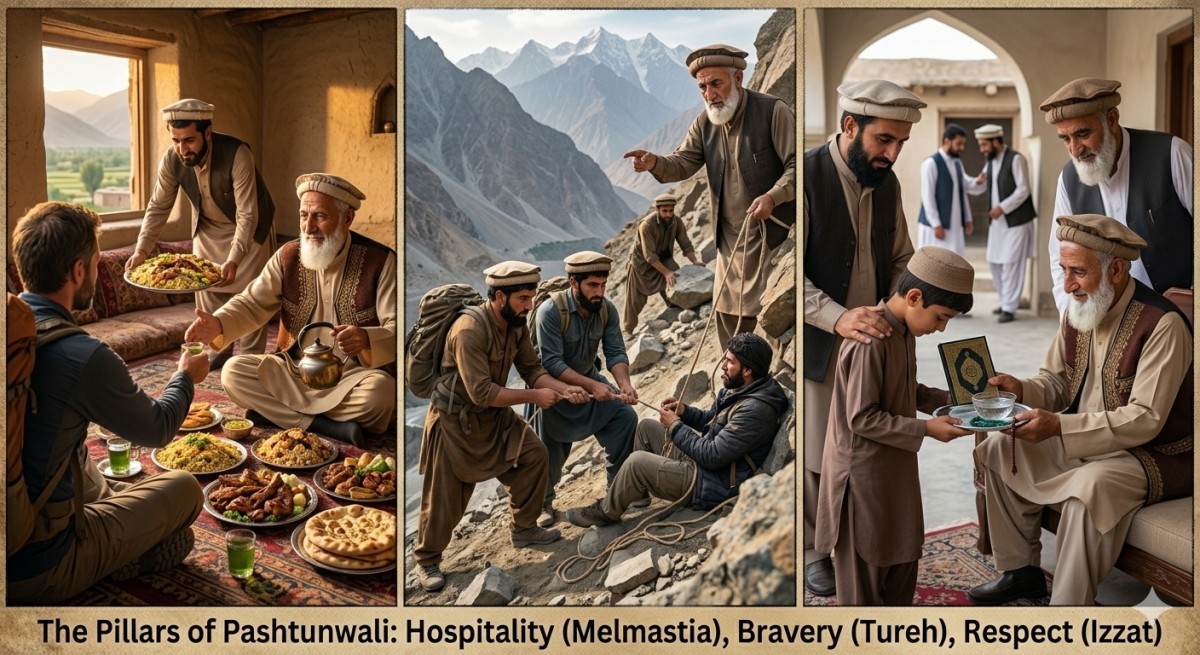
The Pashtoons, also known as Pashtuns or Pakhtoons, are one of the major ethnic peoples of South and Central Asia, with a rich cultural heritage rooted in the mountainous regions of present-day Pakistan and Afghanistan. Their history spans centuries, shaped by mountain landscapes, ancient trade routes, migration, community traditions, poetry, and a strong sense of identity.
In Swat Valley, Pashtun culture is deeply woven into everyday life. The valley is home to a predominantly Yousafzai Pashtun population whose traditions, language, hospitality, and social customs have helped shape the character of Swat.
Pashtun identity is expressed through Pashto language and poetry, traditional dress, music, food, storytelling, family values, and community gatherings. One of its most celebrated traditions is Melmastia—the generous hospitality offered to guests. For many Pashtoon families, welcoming a visitor is not simply good manners; it is a reflection of dignity, honor, and cultural pride.
Traditional values are often associated with Pashtunwali, a customary social and ethical code emphasizing principles such as hospitality, honor, courage, loyalty, protection of guests, consultation, and reconciliation. Institutions such as the Hujra, a traditional community gathering place, and the Jirga, a form of collective consultation, have historically played important roles in Pashtun social life.
Pashto itself is an essential part of this cultural identity. Through generations, the language has carried poetry, songs, stories, wisdom, memories, and traditions from one generation to another. The Rubab, traditional gatherings, folk stories, and Pashto poetry add further depth to a culture where oral expression remains an important part of community life.
For visitors to Swat, Pashtun culture is not something confined to history books or museums. It can be encountered in the warmth of a village welcome, the sound of Pashto spoken along the valley, a shared meal, traditional music, a family celebration, or a conversation over a cup of tea.
To know the Pashtoons is to discover a culture where hospitality is a tradition, community is a strength, and heritage continues to live through the people of the mountains.
Frequently Asked Questio
What's Your Reaction?
 Like
0
Like
0
 Dislike
0
Dislike
0
 Love
0
Love
0
 Funny
0
Funny
0
 Wow
0
Wow
0
 Sad
0
Sad
0
 Angry
0
Angry
0



Comments (0)